
Conversations with artists and makers about materials, gestures, places and the paths that shape their practice.
PERSONAL PERSPECTIVE
Rainer Schlüter
Stone sculptor, Dieulefit, Drôme
Background
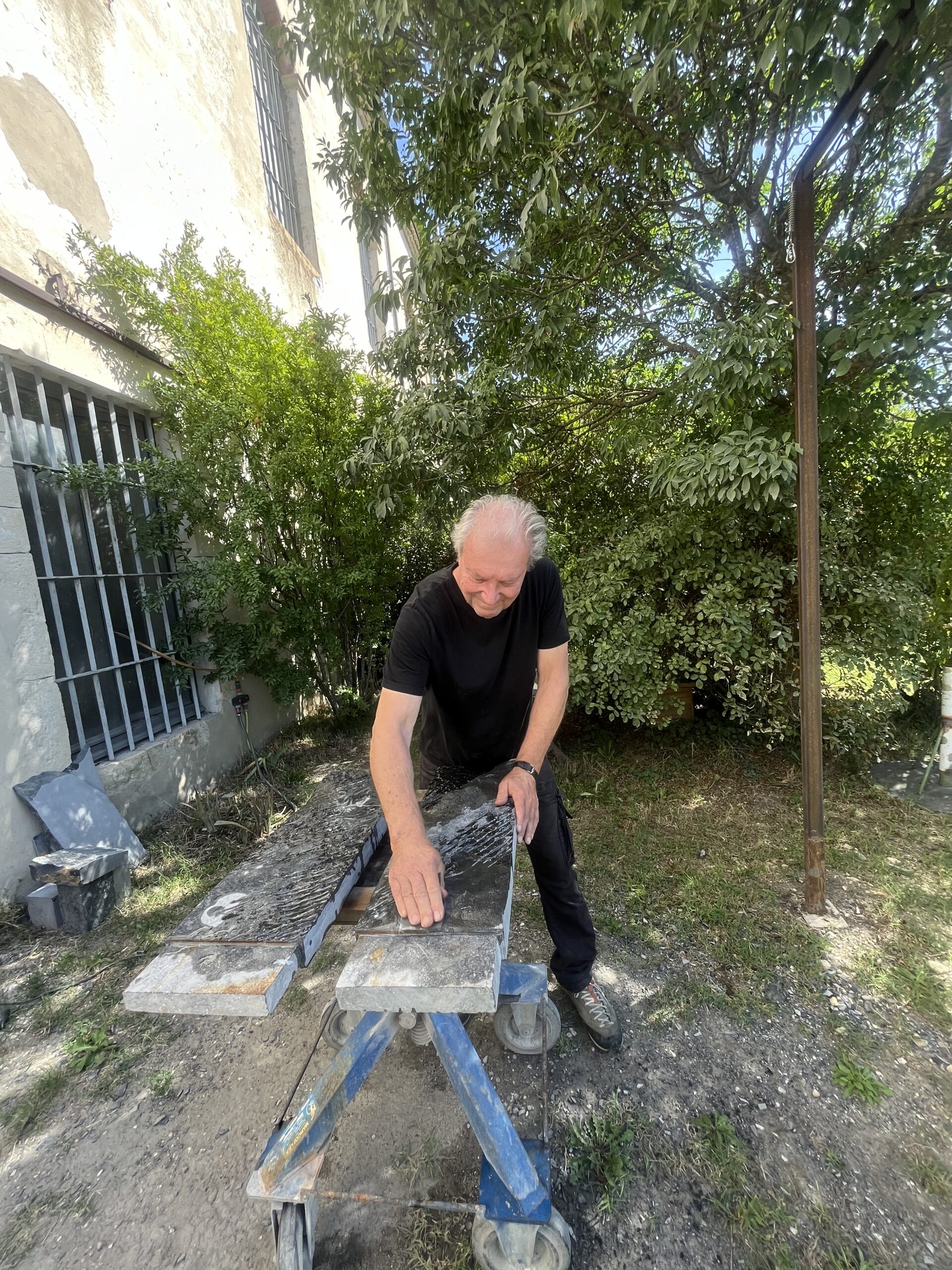
In November 2025, Rainer Schlüter invited me to visit his home in Dieulefit to talk about his experience in the social and solidarity economy and in regional development projects.
He directed me to an unusual place, at the end of a lane lined with small local businesses. He welcomed me at the gate and mentioned, almost in passing: “Oh yes, this is also my studio. I am a stone sculptor.”
I had come to meet the project builder; I discovered the sculptor.
Rainer has a dual background: a degree in management engineering from the Université Libre de Bruxelles, followed by training as a stone sculptor at the Académie des Beaux-Arts in Braine-l’Alleud, Belgium. Two paths that might seem far apart, yet tell the same desire: to transform.
Rainer Schlüter now divides his life between Brussels and Dieulefit. And since that first meeting, our conversations have gradually moved away from economic projects and towards stone.
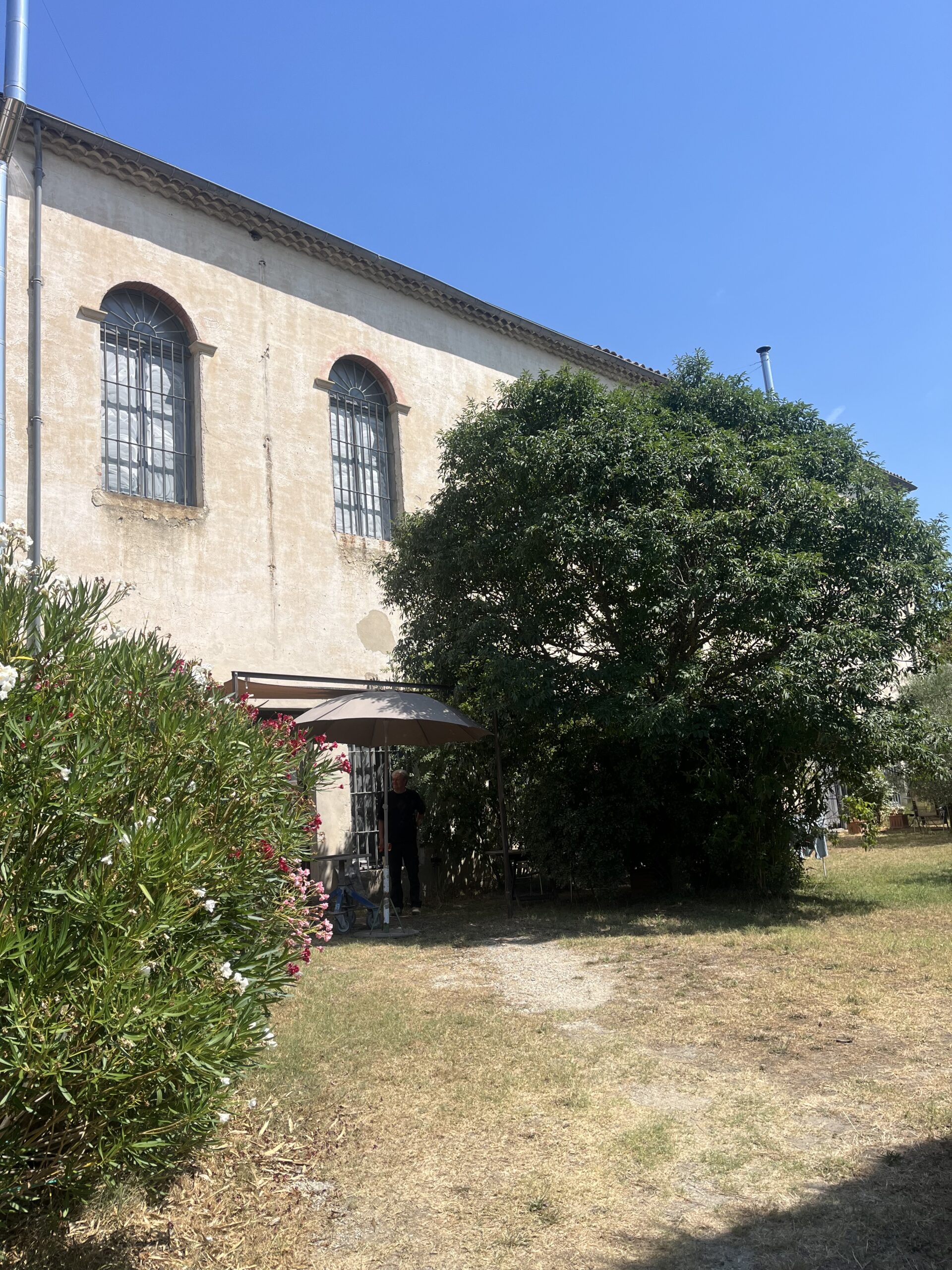
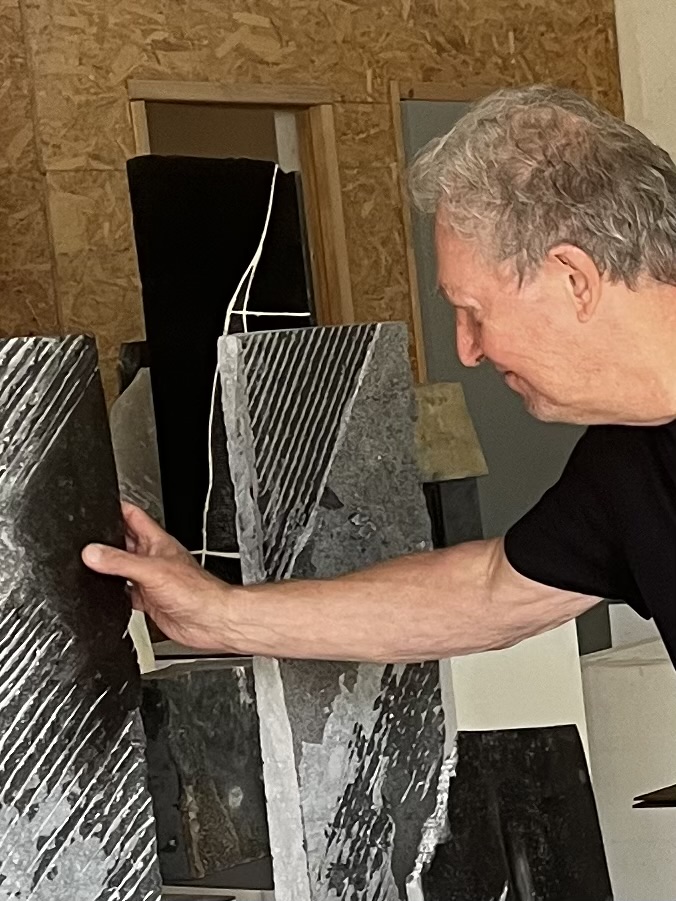
Rainer Schlüter’s studio, Dieulefit, Drôme
THE MATERIAL
In Dieulefit, Rainer set up his studio in a former textile factory. He wanted a place of activity among other places of activity: a workshop surrounded by other workshops. From the entrance, the stones are there. Blocks, fragments, shapes piled up in apparent disorder.
Rainer starts from the material. He chooses his blocks directly in the quarries, with their imperfections and their marks. Some stones will be cut while keeping their raw character; others will be carved, striated, polished until they become almost smooth.
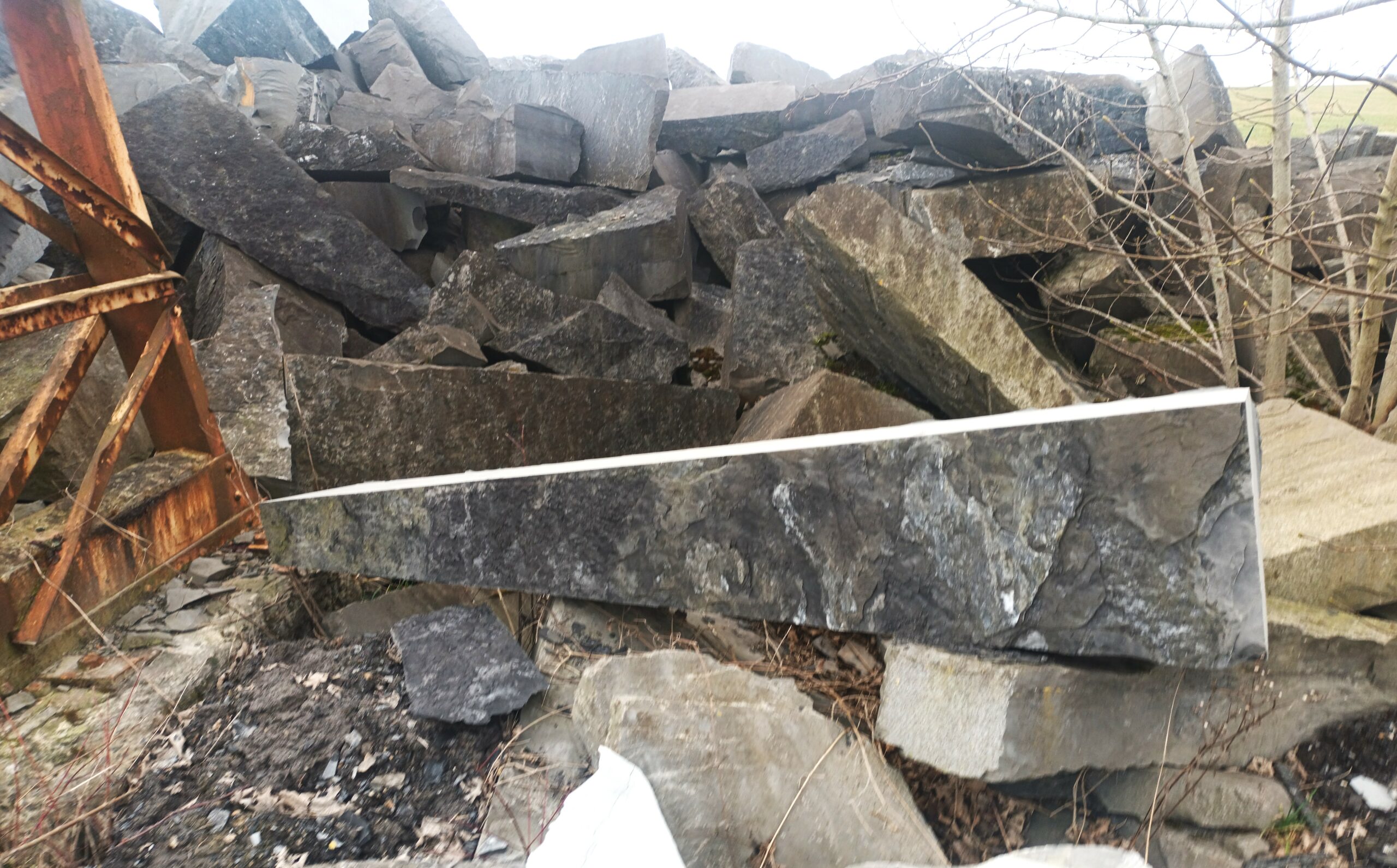
Stones selected at the Mazy quarry in Belgium
Black dominates. The marble comes mainly from Belgium, but also from Carrara.
Other, more unexpected stones appear, such as this polychrome marble whose oxidation reveals ochre traces.
In his creative process, Rainer tells me he rarely starts from a commission or a desire to sell.
A strong impression at an exhibition, a text, a figure, a concern sets the work in motion. Then comes the material. And with it, a form.
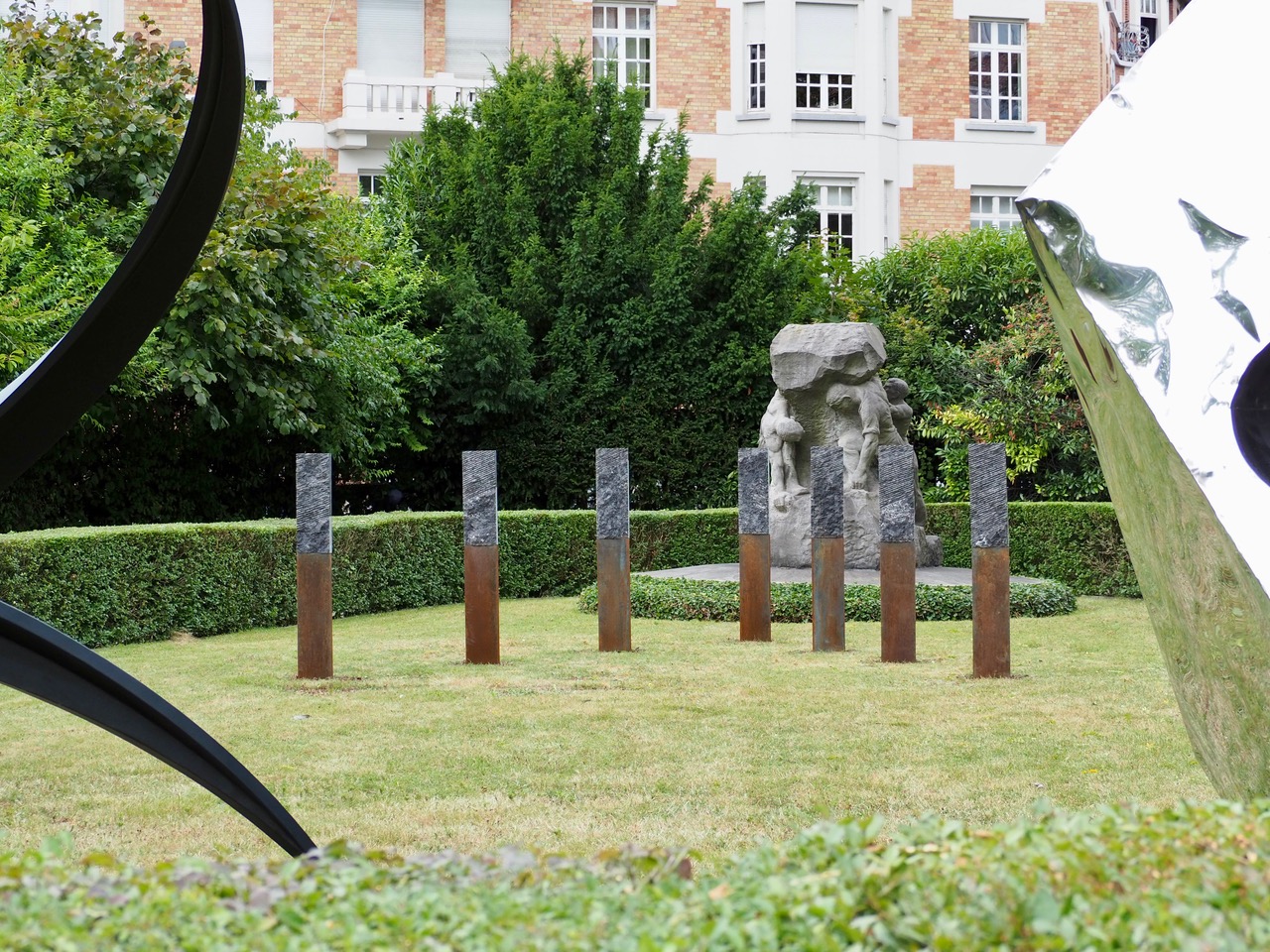
7 stèles de mémoire installation – ART Square, Brussels, August 2026
SEVEN STELAE FOR SEVEN BOUNDARIES
My gaze settles on his most recent work. Seven stelae nearly two metres high. Seven slender vertical forms in Belgian blue stone, on corten steel bases.
They evoke the seven planetary boundaries that have now been crossed.
Why this theme?
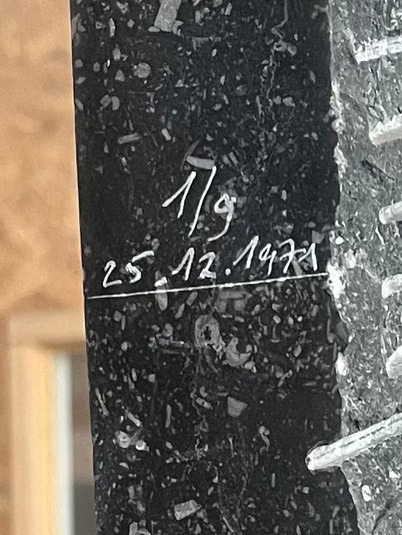
Rainer returns to the material itself: stone belongs to Nature. Human beings transform it, as they transform their environment – sometimes to build, cultivate, irrigate; sometimes to the point of exhausting, destroying or unbalancing it. On each of the seven stelae, he therefore intervenes differently. He striates, notches, marks the stone.
The human trace becomes visible in the material.
And perhaps this is where these works take on their full strength for me. Reports pile up, figures change, debates come and go. Stone remains.
MY PERSPECTIVE
I am particularly sensitive to what these seven stelae carry. Ecological upheaval and the crossing of planetary boundaries run through the work of many artists today. In Rainer Schlüter’s work, this theme meets stone and the deep time it contains.
In the landscapes of the Drôme, this history surfaces everywhere. At the Serre de l’Âne, near Pommerol, the tilted strata make visible several million years of transformations and climatic cycles. At Saoû, the perched syncline bears the trace of the folding, pressure and erosion that shaped the Earth. The lines running across Rainer’s stelae seem to me to belong to this same mineral writing.
But a reversal takes place: the slow movements of geology are answered by the acceleration of imbalances caused by human activity. Stone, which measures time in millions of years, becomes the witness of thresholds crossed within a few decades.
Standing in their verticality, the seven stelae place us before this reality. May an eighth not have to join them for a long time. After their presentation at ART Square in Brussels, they now deserve to find a place capable of welcoming their strength and bringing them fully into dialogue with the public.
Material : Black marble and Belgian blue stone, white Carrara marble and polychrome marble from the Pyrenees
Technique : Direct carving, striation and stone work, from raw to polished
On view : ART Square, Brussels, until 30 August 2027
SELECTION
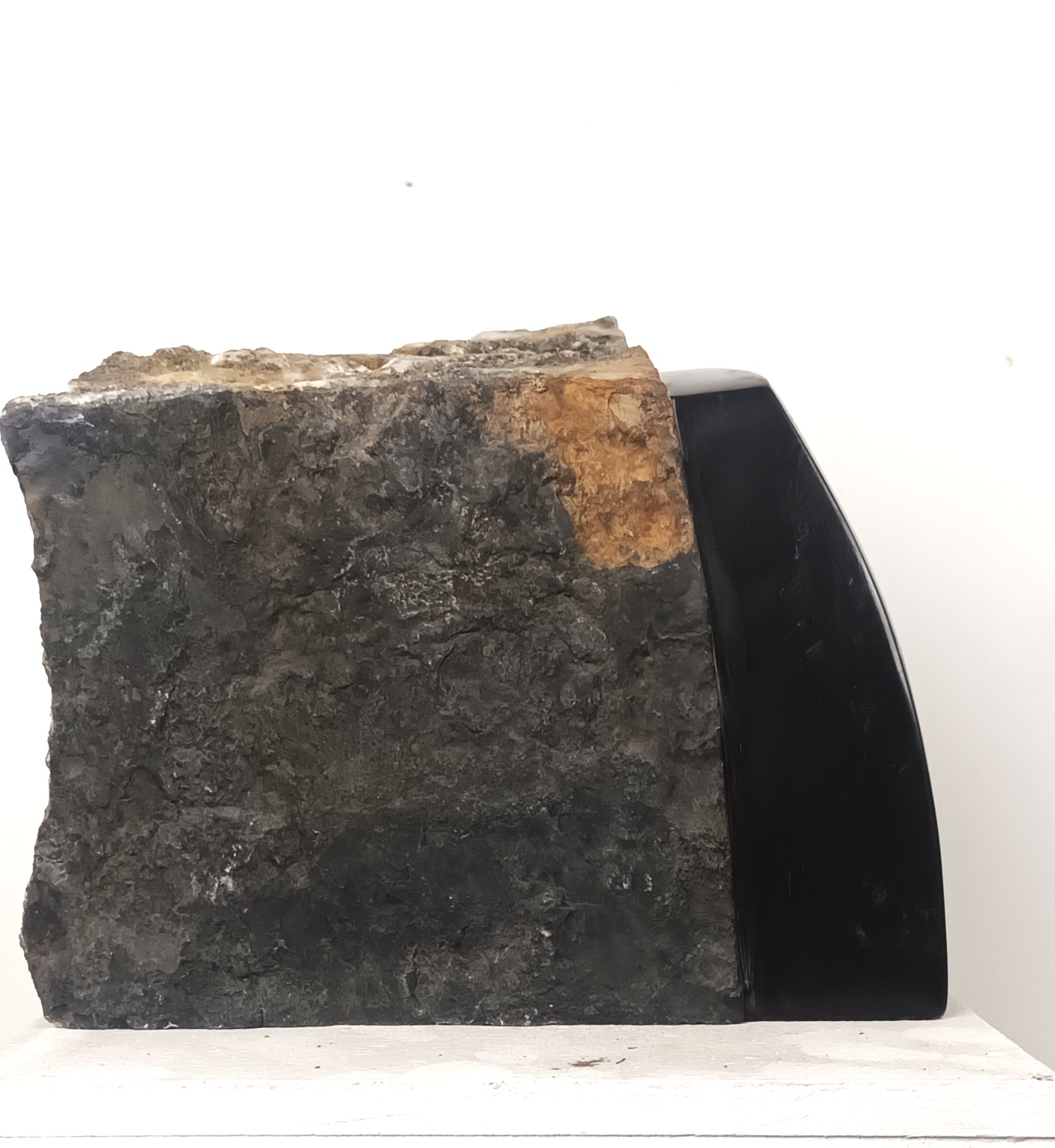
Traces du temps – Cubo, 2026
Black marble from Mazy, Belgium
25 × 25 × 10 cm
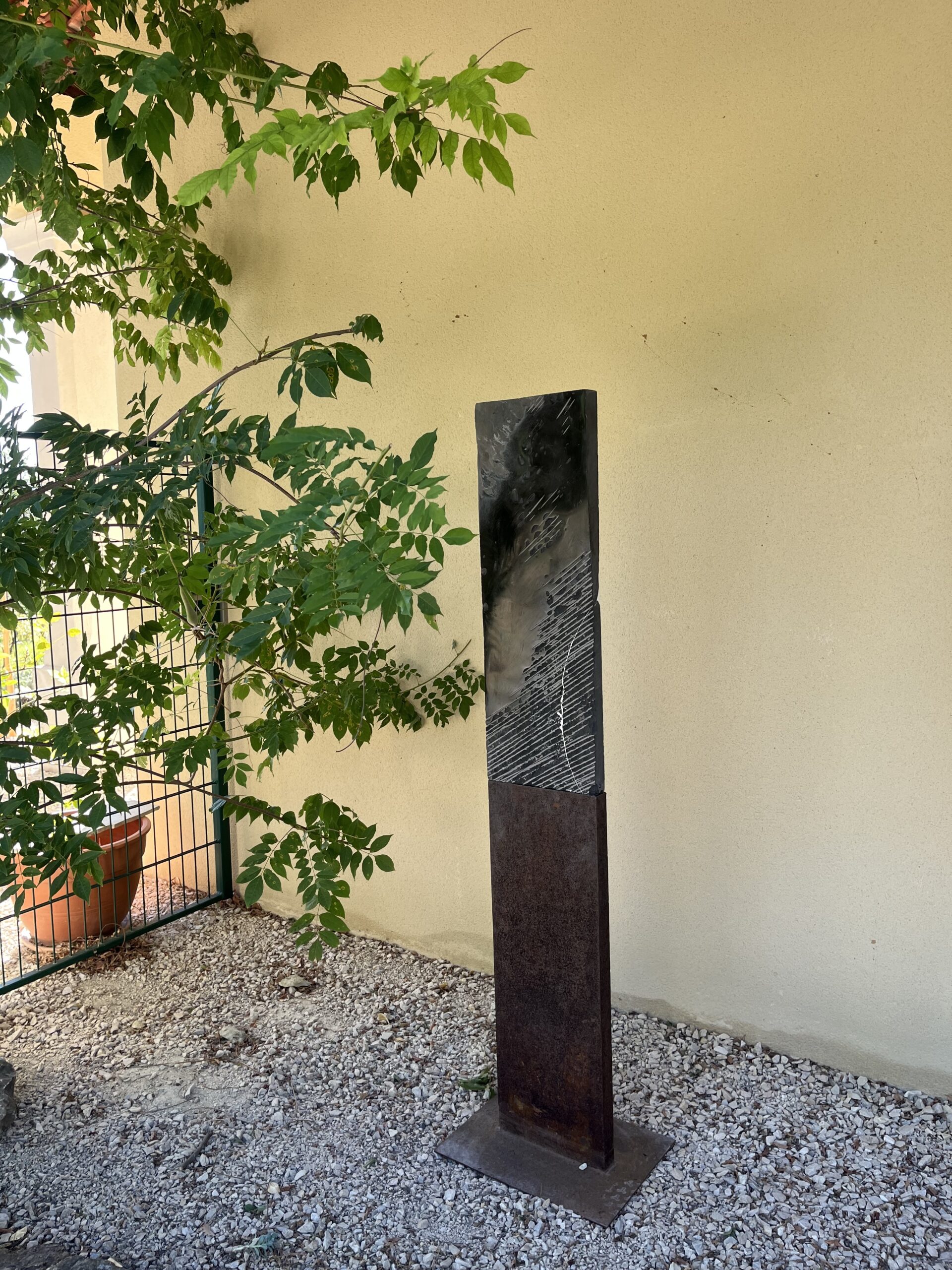
Stèle-Kintsugi, 2025
Black marble from Mazy, Belgium, oxidised steel base
151 × 25 × 4 cm
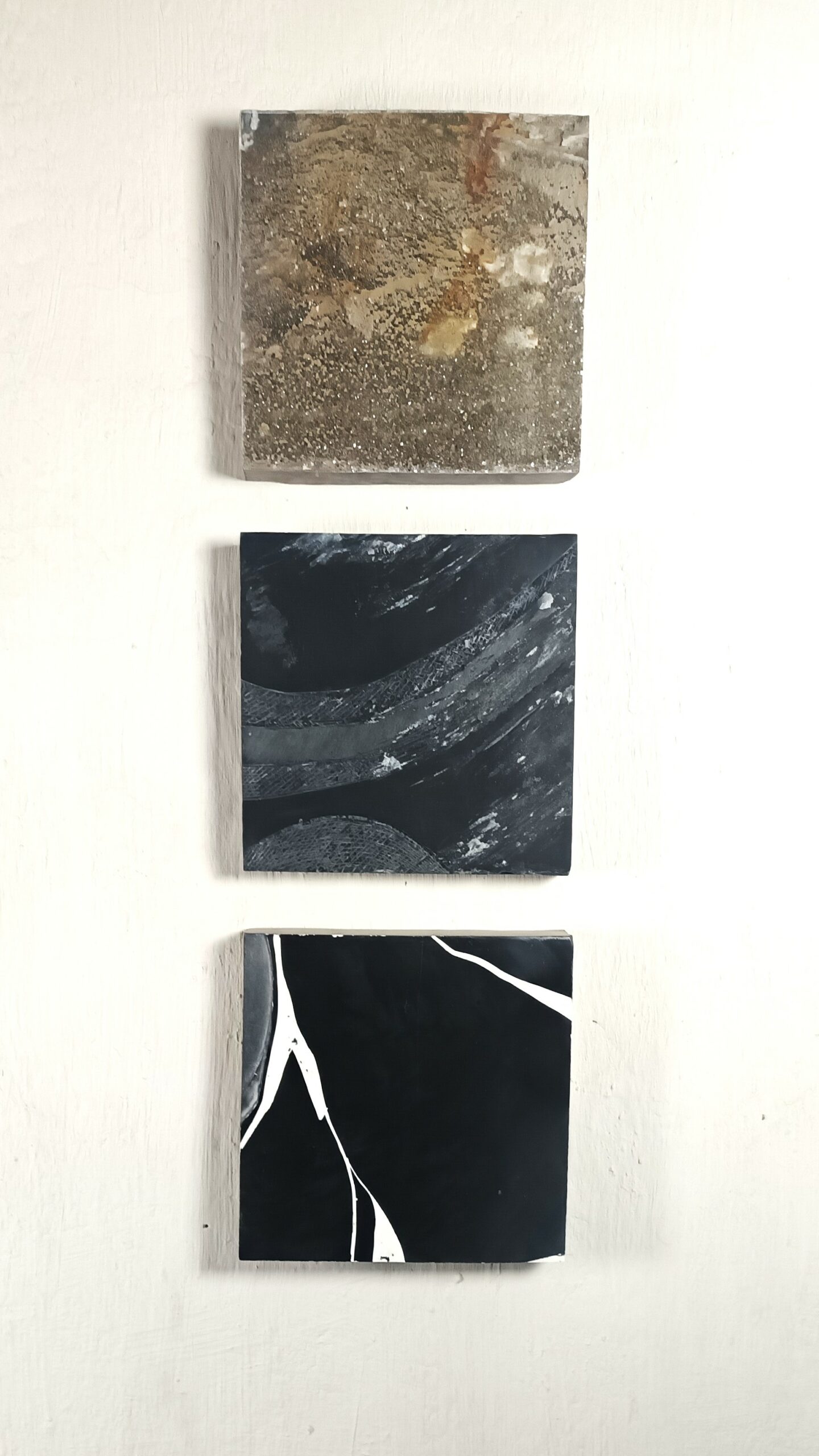
Trio mural – Traces du temps, 2025
Black marble from Mazy, Belgium
30 × 30 × 5 cm
CONTACT
Artist : Rainer Schlüter – 26220 Dieulefit . Brussels – rainer.0711@gmail.com
Contact : Sophie Grenier, Independent Curatorial Practice – Drôme · Venice – sg@soffita.com